Flask is able to handle couple of accepted types of responses. I’ll summarize three most common ones:
- Text
- Json
- Template
Text
The simplest form
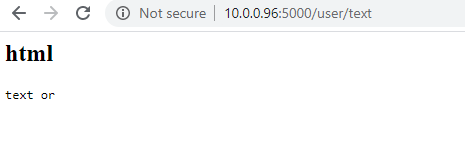
@index_page.route("/text")
def res_text():
    return "text or " + "<h2>html<h2>"
|
Alternatively, can use flask’s make_response method
@index_page.route("/text_response")
def res_text_res():
    res = make_response("text or " + "<h2>html<h2>", 200)
    return res
|
The result will be
Json
Json is a more commonly used format, particularly for developing FE and BE separately
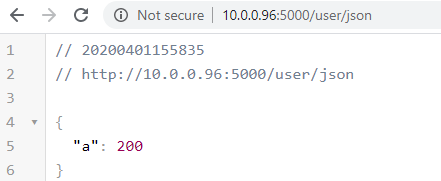
@index_page.route("/json")
def res_json():
    import json
    data = {
        "a": 200
    }
    res = make_response(json.dumps(data))

    return res
|
Alternatively use flask’ jsonify method
@index_page.route("/json_jsonify")
def res_json_jsonify():
    data = {
        "a": 200
    }
    res = make_response(jsonify(data))
    return res
|
the result will be
Template
- Use flask’s
render_template method
- Add
templates folder, on the same level with application file
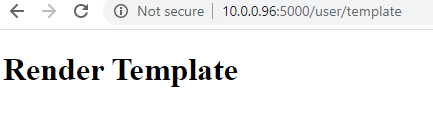
@index_page.route("/template")
def res_temp():
    return render_template("index.html")
|
result